
The Hidden Cost of Never Removing Features
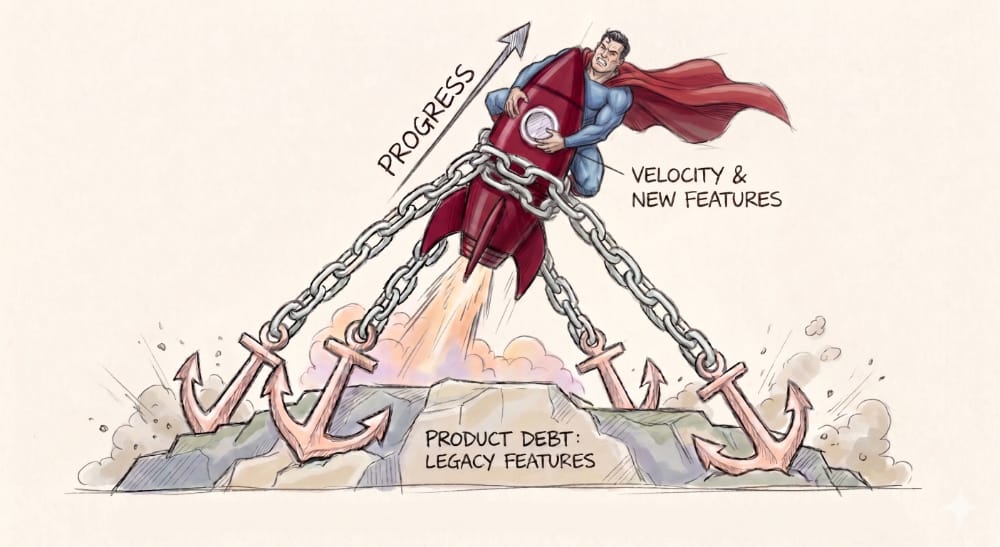
Why is it that engineering refactors code continuously without hesitation, but Product keeps legacy features running for years?
Because removing doesn't feel like progress. And it's rarely treated as such.
But what you miss is that the features you aren't touching are accruing debt.
It's called Product Debt.
Just like engineering debt slows development, product debt slows everything. Velocity. Clarity. User experience.
The difference? Engineers inherently know when code might break. PMs rarely see when features are breaking the product.
Picture this: Your team built an internal analytics dashboard two years ago. Usage is low but consistent. A vendor now offers the same capability, better integrated, at lower cost.
The team says: "It's working. Why risk the migration?"
So you keep maintaining it. Small bugs get fixed. Edge cases handled. New hires get onboarded to "how our dashboard works."
❌ Meanwhile:
- Engineering effort goes to maintenance, not new bets.
- Users have to learn two systems (yours + the better alternative)
- Strategic features get delayed because "the team is busy"
That's product debt compounding!
🎯 Here's what removal actually unlocks:
- Velocity: Engineering time redirects to high-leverage problems
- Clarity: Users have one clear path, not three mediocre options
- Strategic capacity: Team can take bigger bets when they're not maintaining old ones
The features blocking your roadmap aren't the ones you haven't built yet. They're the ones you're afraid to remove.
Engineers refactor to ship faster. PMs need the same instinct—prune to scale.
What feature in your product is accruing debt right now?